

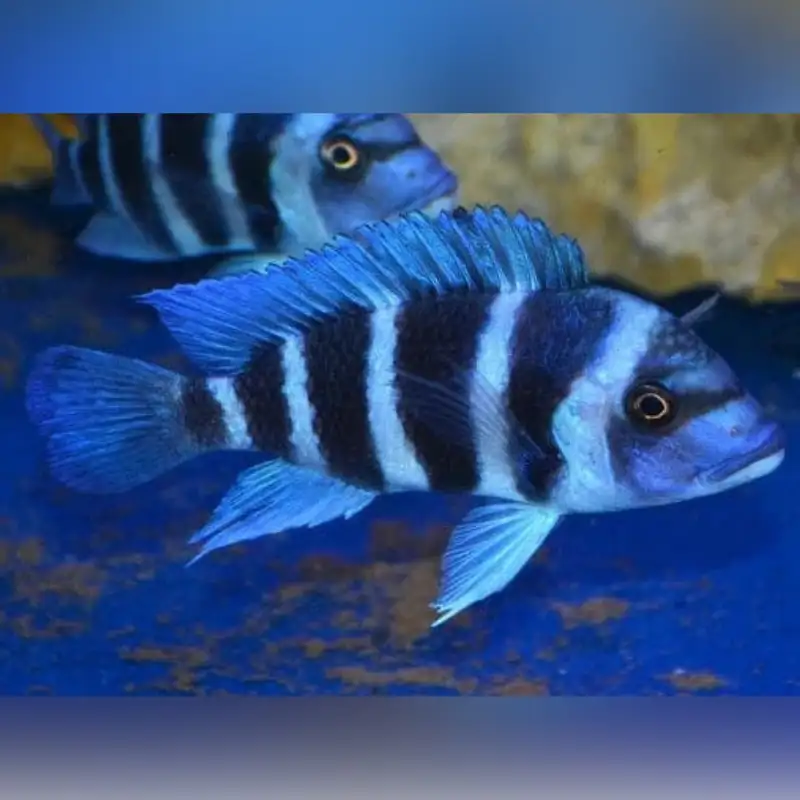
Description
1. Origin & Natural Habitat
-
Scientific Name: Cyphotilapia frontosa
-
Origin: Endemic to Lake Tanganyika, East Africa.
-
Environment: Unlike many cichlids that inhabit shallow, turbulent shores, the Frontosa is a deep-water species, often found at depths of 30–50 meters (100–160 feet). Because of this depth, they are accustomed to dimly lit, stable waters and can be startled by bright aquarium lights.
2. Appearance & Anatomy
-
Size: They are among the largest Rift Lake cichlids. Males can grow to 35 cm (14 inches), while females are generally smaller, averaging around 25 cm (10 inches).
-
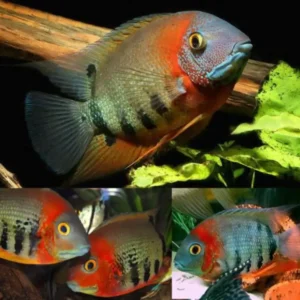
The Hump: Their most defining feature is the nuchal hump—a fatty lump on the forehead. While both sexes can develop this, it is significantly larger in dominant males and serves as a sign of age and status.
-
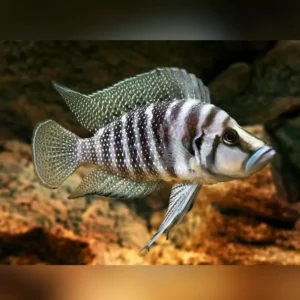
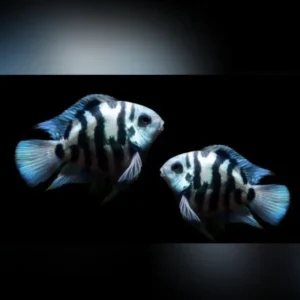
Coloration: They display a striking pattern of 6 or 7 broad, black vertical bands against a white or blue background. Their fins often have long, trailing filaments that can develop a rich blue hue, especially in specific regional variants (e.g., “Blue Zaire”).
3. Temperament & Behavior
-
“Gentle Giant”: Frontosas are slow-moving and generally peaceful toward fish they cannot eat. They do not display the frantic aggression typical of many other African cichlids.
-
Predatory Nature: Despite their calm demeanor, they are opportunistic predators. In the wild, they feed at dawn and dusk. Rule of thumb: If a tank mate fits in their mouth, it will eventually be eaten.
-
Social Structure: They are social fish that do best in colonies. A typical setup involves one dominant male and several females (harem), which helps disperse any minor aggression.
4. Aquarium Care
-
Tank Size: Minimum 75 gallons for a single adult, but 125–150 gallons is highly recommended for a colony to provide adequate swimming space.
-
Water Conditions: They require hard, alkaline water to match their lake origin.
-
pH: 7.8 – 9.0
-
Temperature: 24°C – 27°C (75°F – 80°F)
-
-
Decor: Use a sandy substrate and plenty of large rocks to create caves and visual barriers. Ensure rock structures are stable, as these large fish can be clumsy when startled.
5. Diet & Feeding
-
Diet: They are carnivorous. In captivity, they accept high-quality sinking pellets, krill, shrimp, and earthworms.
-
Feeding Tip: Because they are prone to “float” (swim bladder issues) if they ingest too much air, sinking food is preferred over floating flakes or sticks.
6. Breeding
-
Type: They are maternal mouthbrooders.
-
Process: The female lays eggs and immediately scoops them into her mouth. The male fertilizes them inside her mouth. She will hold the eggs and fry for about 21–28 days, refusing food during this time, until the fry are large enough to be released.
-
Patience: Frontosas are slow growers and may take 3–4 years to reach sexual maturity.

Reviews
There are no reviews yet.