

Description
1. Origin & Habitat
-
Scientific Name: Paracheirodon axelrodi.
-
Origin: Native to the upper Orinoco and Negro River basins in South America (Brazil, Colombia, Venezuela).
-
Environment: In the wild, they inhabit slow-moving “blackwater” streams—water stained dark brown by decaying leaves and roots. This environment is typically very soft, acidic, and dimly lit.
2. Appearance (Cardinal vs. Neon)
-
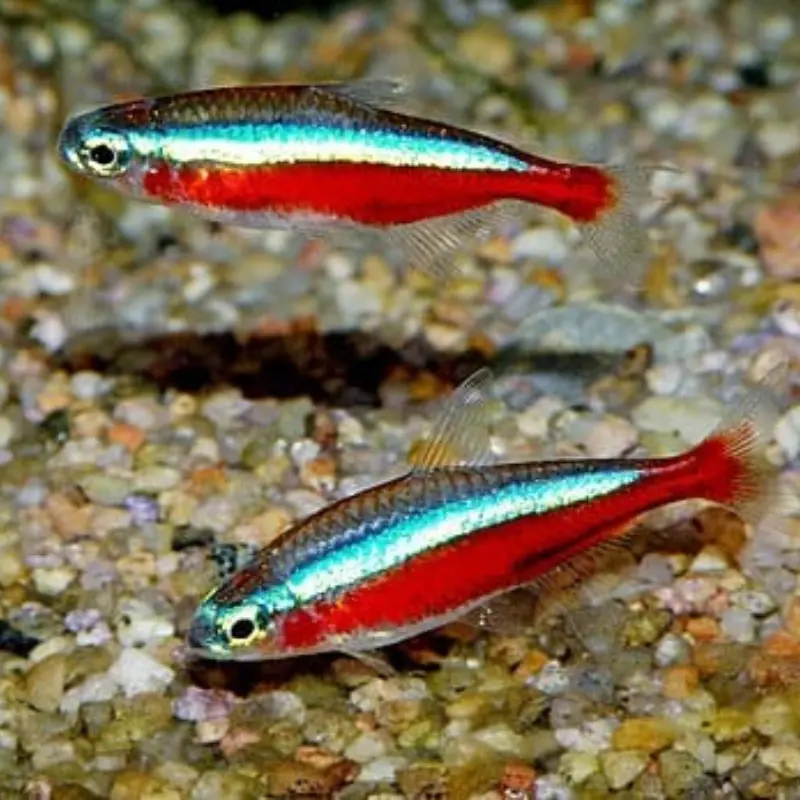
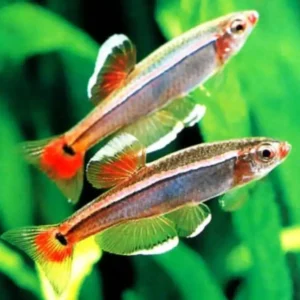
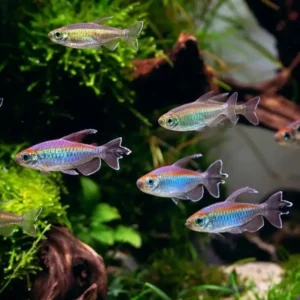
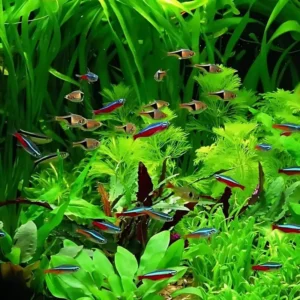
The Key Difference: The easiest way to tell them apart from Neon Tetras is the red stripe.
-
Neon Tetra: Red stripe starts at the middle of the body and goes to the tail.
-
Cardinal Tetra: Red stripe runs the entire length of the bottom half of the body.
-
-
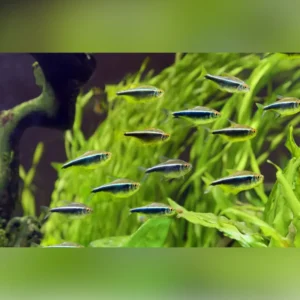
Iridescence: The upper stripe is an electric neon blue/green that reflects light. In a dark tank, they appear to “glow.”
-
Size: They grow slightly larger than Neons, reaching up to 5 cm (2 inches).
3. Water Requirements (Warmth Lover)
-
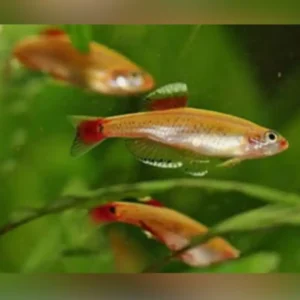
Temperature: Unlike the White Cloud Minnows you showed earlier, Cardinals are true tropical fish and love heat. They prefer 23°C – 29°C (73°F – 84°F).
-
Sensitivity: They are generally more sensitive to water quality changes than Black Neons. They should be added to mature, established tanks rather than brand new ones.
-
pH: They prefer soft, acidic water (pH 4.5 – 7.0).
4. Behavior & Tank Setup
-
Schooling: They are schooling fish and feel stressed if kept alone. You need a group of at least 6, though 15–20 creates a breathtaking display.
-
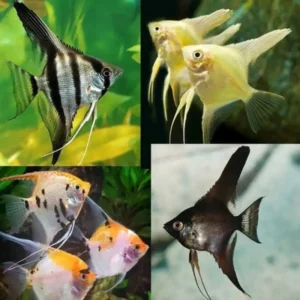
Temperament: Completely peaceful. They are excellent community fish but should not be kept with large fish (like Angelfish) that might mistake them for a snack.
-
Decor: They look best in tanks with dark substrate, driftwood, and plenty of plants. The dark background makes their colors appear much more intense.
5. Diet
-
Feeding: They are omnivores.
-
Recommendations: They will readily eat high-quality flakes and micro-pellets. For the best health and color, feed them live or frozen foods like daphnia and baby brine shrimp occasionally.
6. Lifespan
-
Longevity: With proper care and warm, clean water, they can live for 4 to 5 years, which is quite long for such a small tetra.

Reviews
There are no reviews yet.