

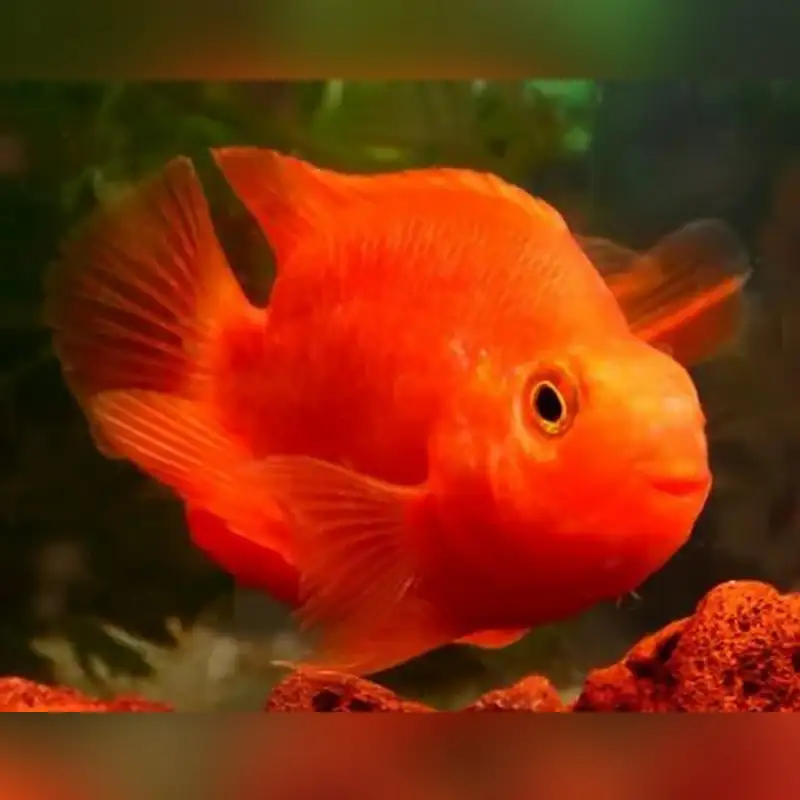
Description
1. Origin & Hybrid Status
-
Scientific Name: None (Hybrid). often listed as Cichlasoma sp. hybrid.
-
Origin: Man-made. They do not exist in the wild.
-
Parentage: Exact lineage is a trade secret, but they are generally believed to be a cross between a Midas Cichlid (Amphilophus citrinellus) and a Redhead Cichlid (Paraneetroplus synspilus).
-
The “Parrot” Name: Named because their nose and mouth resemble a parrot’s beak.
2. Appearance & Deformities
-
Mouth: Their most defining feature is their small, vertical mouth. Most Red Parrots cannot close their mouths completely.
-
Body: They have a round, compact body with a curved spine (similar to “balloon” varieties of other fish).
-
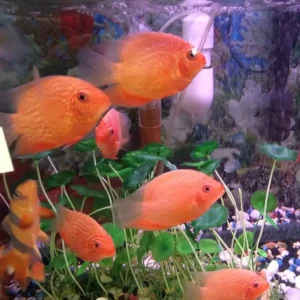
Color: They range from pale orange to deep blood-red. Note: They often need color-enhancing food to maintain that deep red look, otherwise they may fade to orange/pink.
3. Temperament (The “Water Puppy”)
-
Personality: They are incredibly interactive. They will follow your finger along the glass, beg for food, and can even be hand-fed.
-
Aggression: They are “semi-aggressive.” They have the territorial instincts of a cichlid and will try to ram or chase other fish. However, because their mouths are small and deformed, they usually cannot inflict serious damage, making their bark worse than their bite.
4. Aquarium Care
-
Tank Size: Minimum 30 gallons for a single fish, but 55 gallons is better to give them swimming room.
-
Filtration: They are messy eaters and produce a lot of waste, so heavy filtration (like a canister filter) is recommended.
-
Decor: They love to dig! Use sand substrate or heavy gravel. Avoid delicate plants, as they will likely uproot them. Clay pots and large rocks make great hiding spots.
5. Diet & Feeding
-
The Mouth Issue: Because their mouths are shaped awkwardly, they sometimes struggle with floating flakes.
-
Best Food: Sinking pellets are ideal. They also love frozen bloodworms and brine shrimp. Look for foods rich in beta-carotene or “color enhancing” pellets to keep them red.
6. Breeding (The Sad Truth)
-
Sterility: Most male Red Parrots are sterile.
-
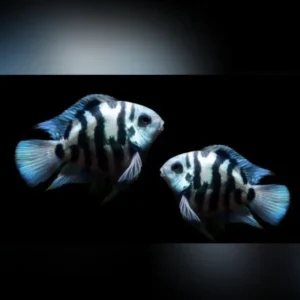
The Process: You will often see them pair up, clean a rock, and lay eggs just like other cichlids. However, because the male cannot fertilize them, the eggs will turn white and fungus over after a few days. Occasionally, a female Parrot can breed with a non-hybrid male (like a Convict Cichlid) to produce fertile fry.

Reviews
There are no reviews yet.