

Description
Scientific Name: Trichopodus trichopterus (formerly Trichogaster trichopterus) Common Names: Blue Gourami, Three-Spot Gourami, Opaline Gourami (patterned variety) Origin: Southeast Asia (Thailand, Vietnam, Malaysia, and the Mekong basin)
Physical Characteristics This fish is larger and more robust than the Dwarf Gourami.
-
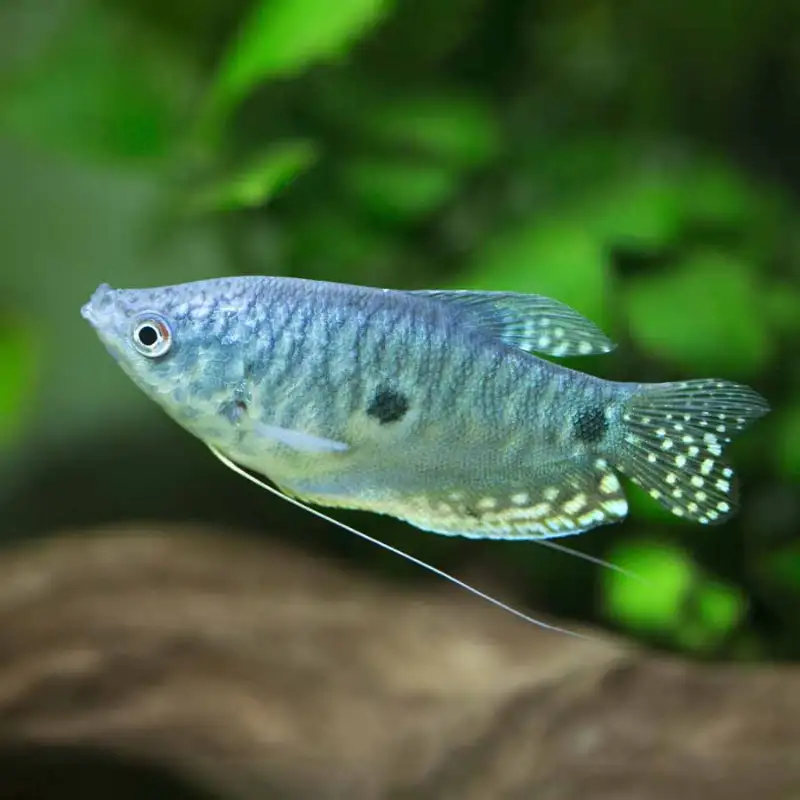
The “Three Spots”: The fish usually has two black spots on its flank—one in the center of the body and one near the tail. When you count the fish’s eye, it makes “three spots.”
-
Coloration: The wild type is brownish-silver, but the aquarium strain is a beautiful powdery blue. When they are happy or breeding, the blue color deepens, and dark marble-like patterns may appear (this variety is often called the Opaline Gourami).
-
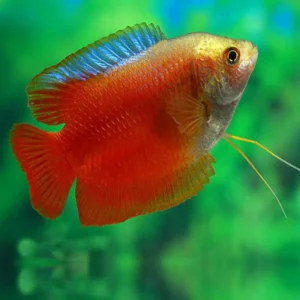
Feelers: Their pelvic fins are modified into long, thin tactile feelers. They use these like whiskers to “taste” and feel objects, plants, and other fish.
-
Size: They are a medium-sized fish, growing up to 5 to 6 inches (13–15 cm).
Behavior and Temperament
-
Semi-Aggressive: While generally fine in a community tank, Blue Gouramis can be bullyish. Males are territorial and will fight other male gouramis. It is best to keep only one male per tank unless the tank is very large.
-
Labyrinth Fish: They have a labyrinth organ that allows them to gulp air. You will frequently see them swim to the top to take a breath.
-
Intelligence: They are quite smart and interactive, often using their feelers to investigate their owners’ hands during cleaning.
Care and Habitat
-
Tank Size: Because they grow up to 6 inches, they need more space than Dwarf Gouramis. A minimum of 29 to 30 gallons is recommended.
-
Water Conditions: They are incredibly hardy and can tolerate a wide range of conditions, though they prefer neutral pH (6.0–8.0) and temperatures between 75°F and 82°F.
-
Diet: They are unfussy omnivores. They will eat flake food, pellets, and are actually famous for eating Hydra (a small aquarium pest) and small snails.









Reviews
There are no reviews yet.