

Description
1. Origin & Biology
-
Scientific Name: Chromobotia macracanthus (formerly Botia macracanthus).
-
Origin: Found in the rivers of Sumatra and Borneo in Indonesia.
-
Lifespan: These are a long-term commitment. With proper care, they can live for 20+ years.
2. Appearance & Defense
-
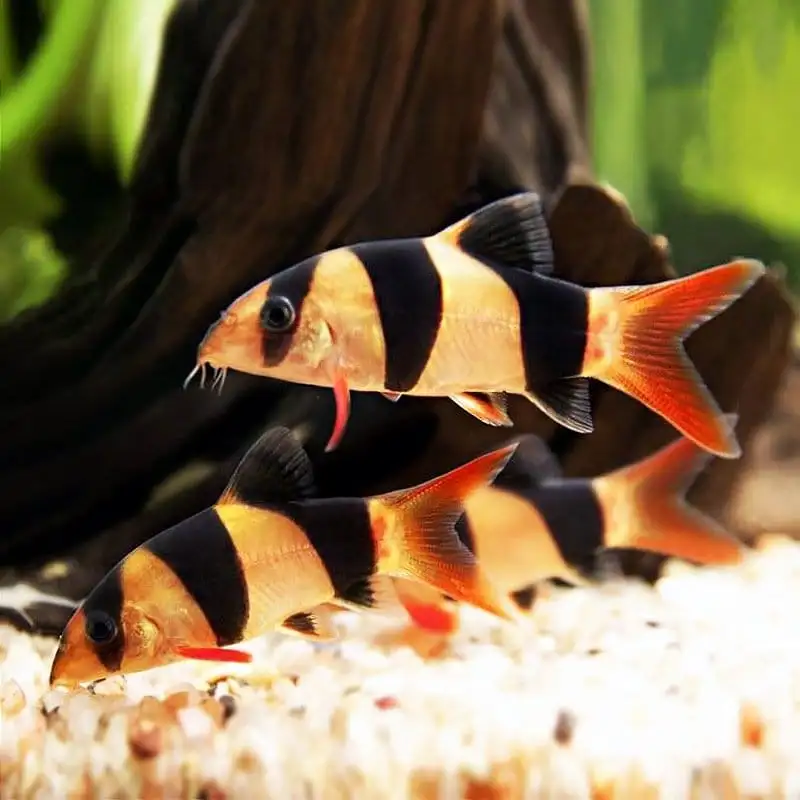
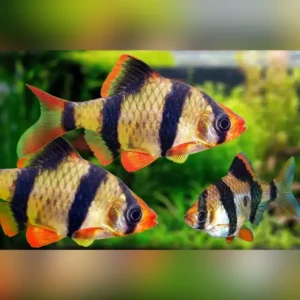
Coloration: They have a smooth, scaleless-looking body that is bright orange-gold, intersected by three broad vertical black bands. The fins are usually a deep red or orange.
-
Whiskers: Like all loaches, they have barbels around the mouth to help them search for food in the substrate.
-
The Hidden Weapon: They possess a sharp, retractable subocular spine located right under their eye. When threatened (or netted), they pop this spine out. Be very careful when netting them, as they can get tangled in the mesh!
3. Behavior (The “Clown” of the Tank)
-
Social: They are extremely social schooling fish. You must keep them in groups of at least 5 or 6. A lone Clown Loach will become shy, stressed, and fade in color.
-
“Playing Dead”: This scares every new owner. Clown Loaches often rest lying completely flat on their sides on the bottom of the tank. They look dead, but they are just napping!
-
Clicking Sounds: They are one of the few fish that make audible noise. You might hear “clicking” sounds when they are happy or eating.
4. Diet (The Snail Eater)
-
Snail Control: They are famous for being the best natural solution for pest snails. They suck snails right out of their shells.
-
Omnivores: Aside from snails, they need high-quality sinking pellets, wafers, and frozen foods like bloodworms.
5. Tank Requirements (The “Big Tank” Rule)
-
Tank Size: This is where people make mistakes. While they grow slowly, they eventually need a 75-gallon tank minimum (125+ gallons is better for a full school of adults).
-
Substrate: Because they dig with their faces, you must use soft sand or rounded gravel. Sharp gravel will injure their barbels.
-
Water: They like warm, clean water with good flow (25°C – 30°C / 77°F – 86°F). They are very susceptible to “Ich” (White Spot Disease) if the water gets cold.

Reviews
There are no reviews yet.