

Description
1. Origin & Background
-
Scientific Name: Tanichthys albonubes (Gold/Golden variant).
-
Origin: unlike the wild type found in China, this “Golden” form does not exist in the wild. It was developed through selective breeding in captivity to isolate the gold coloration.
-
Hardiness: despite being a “designer” morph, it is just as robust and easy to keep as the standard wild type.
2. Appearance
-
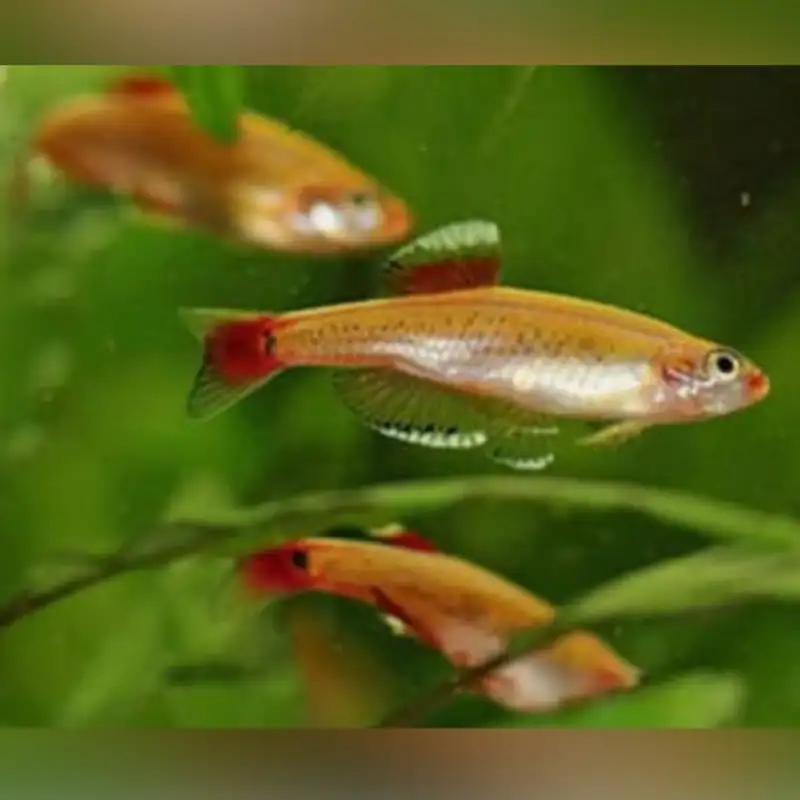
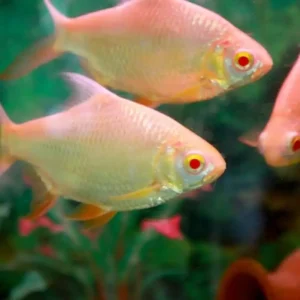
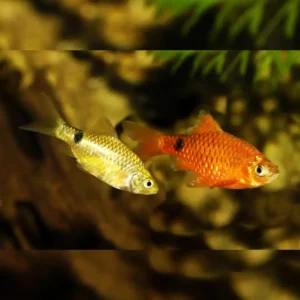
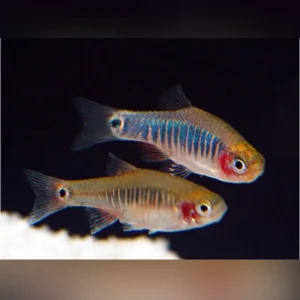
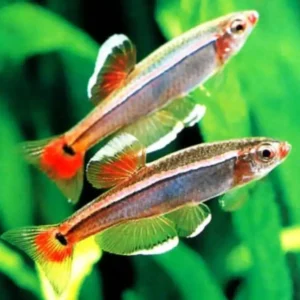
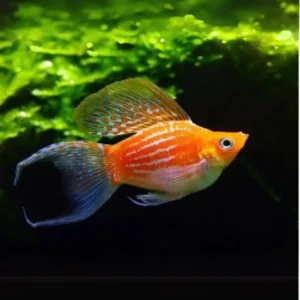
Body Color: The dark pigments of the wild type are absent, leaving a creamy gold or yellow body.
-
Fins: The fins are a striking contrast, often vividly red with distinct white tips.
-
Iridescence: While they lack the dark lateral line, they still possess a subtle, reflective horizontal stripe that can shimmer under good aquarium lighting.
-
Size: They grow to the same size as the standard variety, maxing out around 4 cm (1.5 inches).
3. Water Requirements (Coldwater)
-
Temperature: Like their wild cousins, they prefer cooler water. Ideal range is 15°C – 22°C (60°F – 72°F). They are excellent for unheated indoor tanks.
-
Heat Sensitivity: High tropical temperatures (above 26°C) can cause them stress, fade their beautiful gold color, and shorten their lifespan.
-
Chemistry: They are very adaptable to pH (6.0 – 8.0) and moderate hardness.
4. Behavior & Tank Setup
-
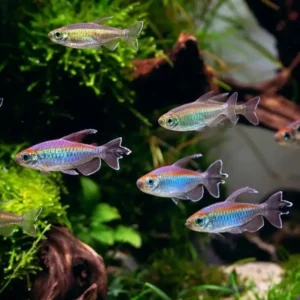
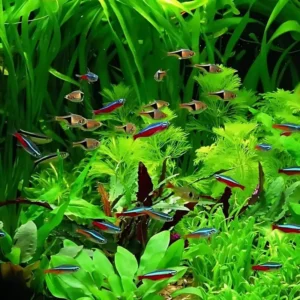
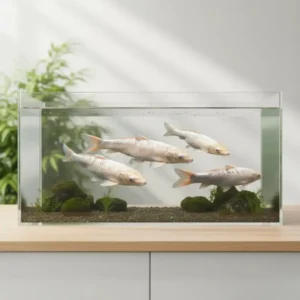
Schooling: They are social fish. Keep them in groups of 6 to 10 or more. A large school of Golden White Clouds against a background of green aquatic plants is visually spectacular.
-
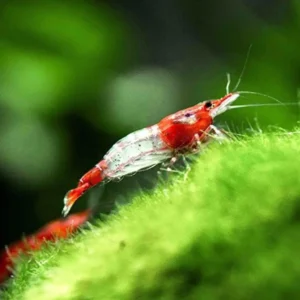
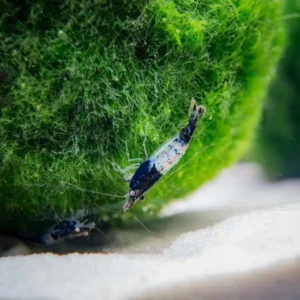
Temperament: Extremely peaceful. They are safe with shrimp (like Red Cherry Shrimp) and other small, calm fish.
-
Activity: They swim in the middle and top layers of the tank and are constantly moving.
5. Diet
-
Feeding: They are omnivores and not picky.
-
Recommendations: High-quality flake food, micro pellets, and treats like frozen daphnia or baby brine shrimp will help maintain their bright gold and red coloration.
6. Breeding
-
Ease: Very easy. They often spawn in the mornings in planted tanks.
-
Fry: The eggs are scattered among plants. In a densely planted tank, some fry often survive without special intervention, appearing as tiny slivers near the water surface.

Reviews
There are no reviews yet.