

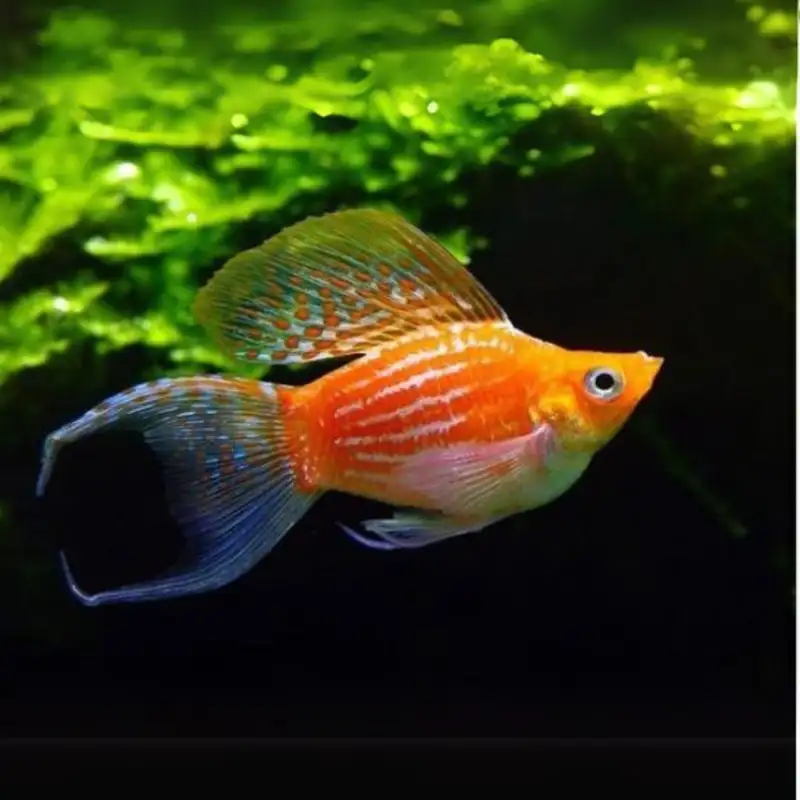
Description
1. Identification & Name
-
Scientific Name: Poecilia latipinna (Sailfin Molly variant).
-
Common Names: Lyretail Molly, Sailfin Molly, Moon Tail Molly (informal).
-
The “Lyretail”: The name comes from the tail shape, which mimics a “Lyre” (an ancient musical instrument) or a crescent moon. This is a genetic trait bred into the fish for aesthetics.
2. Appearance
-
Fins:
-
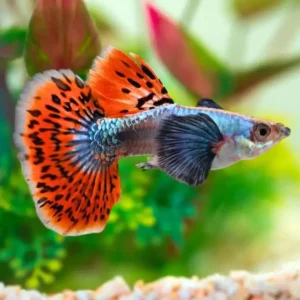
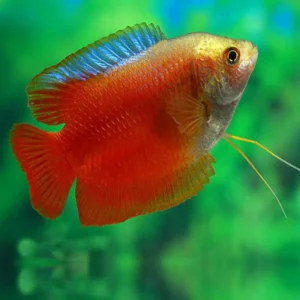
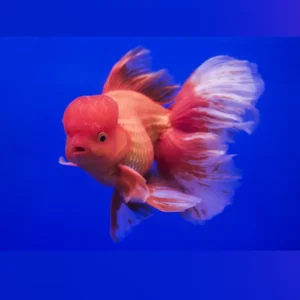
Tail: The split tail with long trailing filaments is the defining feature.
-
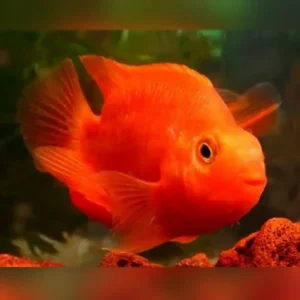
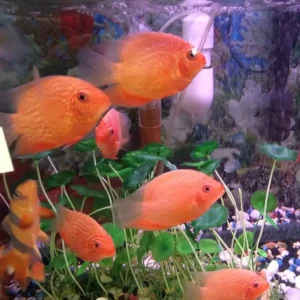
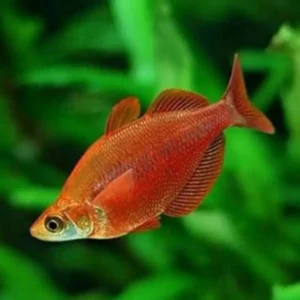
Dorsal (Top) Fin: Your photo shows a “Sailfin” variety. The male has a massive, magnificent top fin that he raises to impress females or intimidate rivals.
-
-
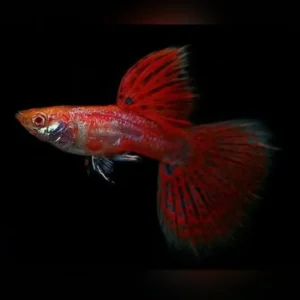
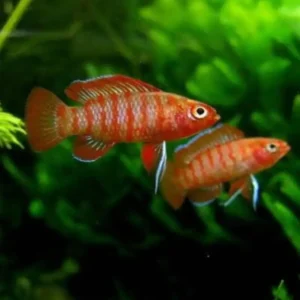
Color: This specific morph is a solid, glowing neon orange, making it stand out against green plants.
-
Gender: It is very easy to tell males from females. Males (like the one in the photo) have a gonopodium—a modified, stick-like anal fin used for mating. Females have a standard triangular fan-shaped anal fin.
3. Behavior & Social Structure
-
Activity: They are high-energy fish. They constantly swim around the tank, usually near the top, looking for food.
-
Temperament: Generally peaceful, but males can be aggressive chasers when trying to mate.
-
The Golden Ratio: Because males are relentless breeders, you should always keep 1 male for every 2–3 females. This spreads out the harassment so no single female gets stressed to death.
4. Water Requirements (Hard Water Lovers)
-
Hardness: Mollies are NOT soft water fish. They need hard, alkaline water (high pH and high mineral content) to thrive.
-
Salt: Mollies are unique because they can live in fresh, brackish, and even full saltwater! adding a little Aquarium Salt to their tank prevents diseases like “Shimmy” (where they shake in place) and Ich.
-
Temperature: Tropical, 24°C – 28°C (75°F – 82°F).
5. Diet (Algae Eaters)
-
Omnivores: They eat everything, but they have a high requirement for plant matter.
-
Algae Control: They are famous for pecking at algae on rocks and plants.
-
Food: Feed them flake food with added Spirulina or blanched vegetables (like spinach or zucchini) to keep their digestive systems healthy.
6. Breeding
-
Livebearers: They do not lay eggs. The female gives birth to 20–100 fully formed baby fish (fry) roughly every 30 days.
-
Care: If you want the babies to survive, you must provide floating plants (like Hornwort) for them to hide in, or the parents will eat them.


Reviews
There are no reviews yet.