

Description
Scientific Name: Carassius auratus (Fancy variety) Origin: Selectively bred in China and Japan; they do not exist in this form in the wild.
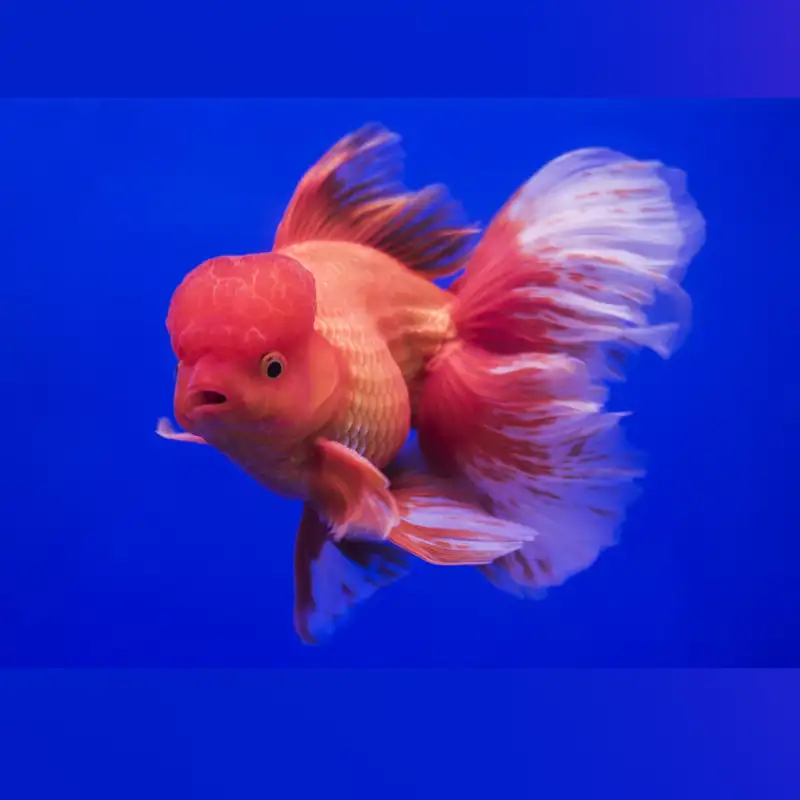
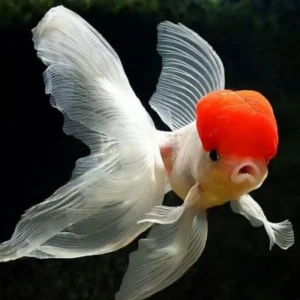
Physical Characteristics The Oranda is often confused with the Lionhead goldfish, but the key difference is that the Oranda has a dorsal fin (the fin on its back), whereas the Lionhead does not.
-
The Wen (Hood): The most distinct feature is the benign, fleshy growth on the head. This wen usually begins to develop when the fish is 3–4 months old and continues to grow for about two years. It can sometimes grow so large that it covers the fish’s eyes (though this is generally avoided by breeders).
-
Fins: This variety possesses a long, flowing split caudal (tail) fin that fans out beautifully when the fish is stationary. All its fins are generally paired, except for the dorsal fin.
-
Body Shape: It has a short, deep, and round body, often described as “egg-shaped.” Because of this shape, they are not agile swimmers compared to common goldfish.
Behavior and Temperament Orandas are incredibly peaceful and social. They are scavengers that spend much of their time foraging in the substrate for food. Because they are slow swimmers due to their body shape and heavy head growth, they should not be kept with fast-swimming fish (like Comets or Shibunkins) that might outcompete them for food.
Care and Lifespan
-
Lifespan: With proper care, they can live 10–15 years.
-
Water Quality: Like all goldfish, Orandas are heavy waste producers. They require strong filtration and regular water changes to keep the water clean.
-
Temperature: They are cold-water fish and prefer temperatures between 65°F and 72°F (18°C–22°C).

Reviews
There are no reviews yet.