

Description
Long Description
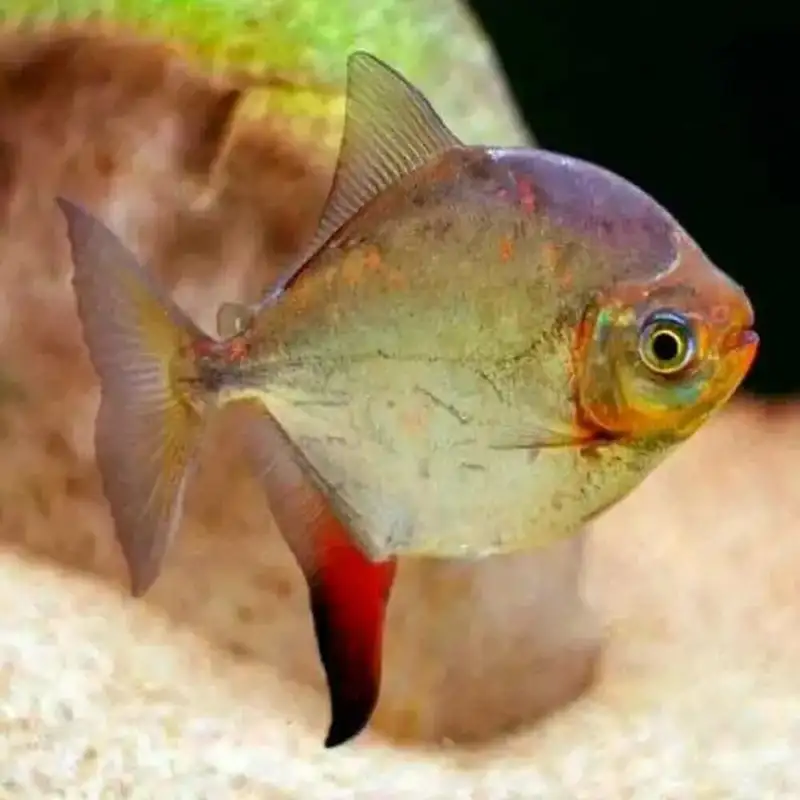
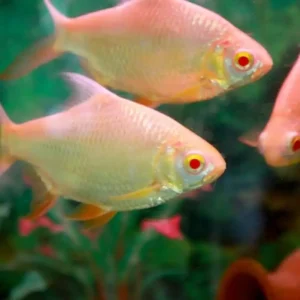
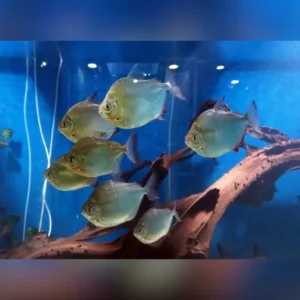
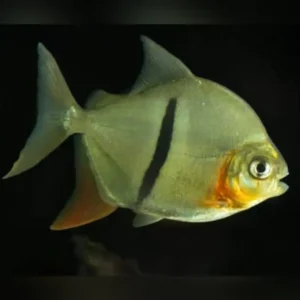
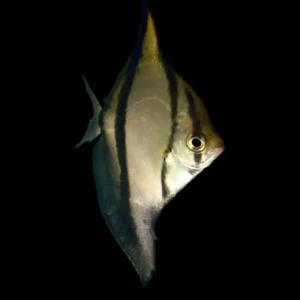
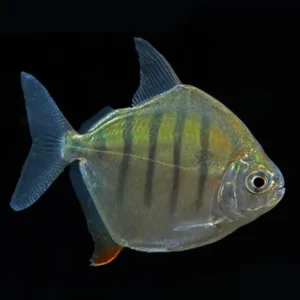
Scientific Name: Myloplus rubripinnis (often sold as Myleus rubripinnis) Common Names: Red Hock Silver Dollar, Red Hook Silver Dollar (sometimes confused, but “Hock” refers specifically to the red patch) Origin: Northern South America (Guyana, Suriname, French Guiana, Amazon Basin)
Physical Characteristics This species is easily distinguished from the standard Silver Dollar by its size and color details.
-
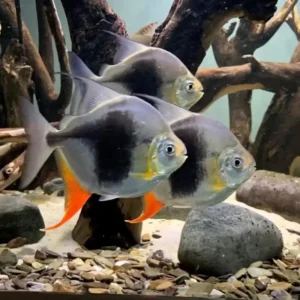
The “Red Hock”: The most striking feature is the bright red coloration on the anal fin (the bottom fin). In adult males, this fin often extends into a curved “hook” shape.
-
Coloration: The body is a metallic silver, but unlike the plain Silver Dollar, the Red Hock often features tiny, subtle dark spots scattered across its flanks.
-
Size: They grow significantly larger than the common Silver Dollar, reaching lengths of 8 to 10 inches (20–25 cm).
-
Body Shape: High-backed, round, and laterally compressed (flat from side to side).
Behavior and Temperament
-
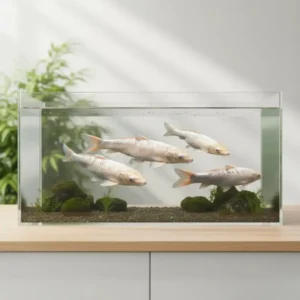
Schooling: Like all Silver Dollars, they are highly social. They must be kept in groups of 5 or more to feel secure. A single fish will be extremely shy and prone to hiding.
-
Diet: They are primarily herbivores. They have strong teeth designed to crush seeds and tear leaves. In the aquarium, they will eat almost any live plant.
-
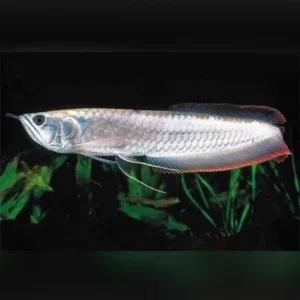
Temperament: They are peaceful tank mates suitable for large community tanks with other robust fish (like Cichlids, Datnoids, or Arowanas).
Care and Habitat
-
Tank Size: Due to their large adult size and need for schooling, a minimum of 75 gallons is required, though 100+ gallons is preferred for a full-grown group.
-
Water Conditions: They prefer soft, slightly acidic water (pH 6.0–7.0) and good oxygenation.
-
Decor: Because they eat live plants, use driftwood, rocks, and artificial plants. Keep the lighting moderate, as they can be skittish in very bright light.

Reviews
There are no reviews yet.